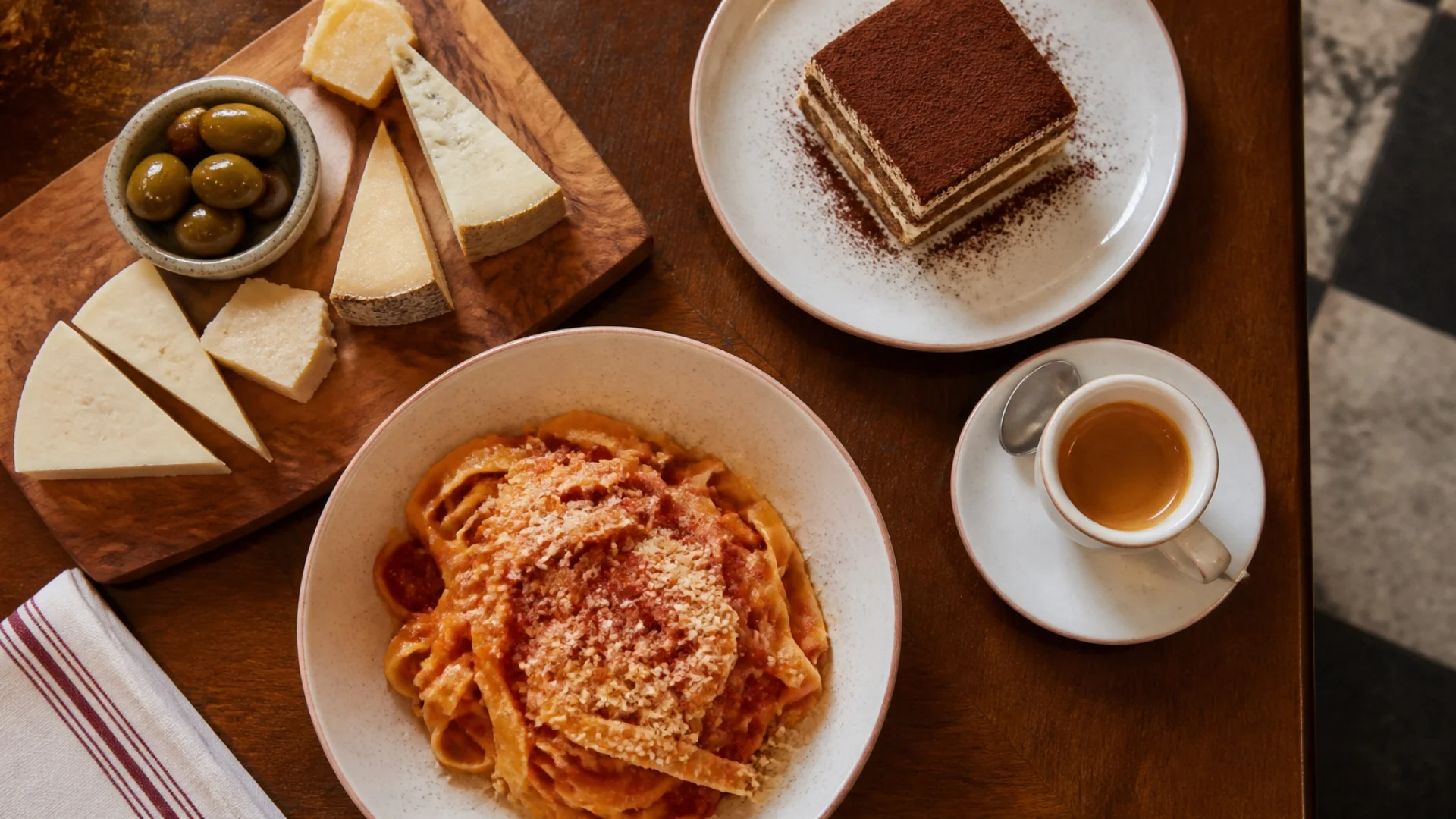
Eating out in Rome is one of the great pleasures of visiting the city, and a few local habits make it even better. Romans have clear ideas about when to eat, how a meal is built and what goes with what. None of these are strict rules for guests, but knowing them helps you order like a local and enjoy your meal the Roman way.
When Romans eat
Lunch in Rome usually starts between 12:30 and 13:30 and can easily last until three. Dinner starts later than in many countries, typically from 19:30 or 20:00, and on summer evenings Romans often sit down after 21:00. Between meals there is the aperitivo, a drink with a few nibbles in the early evening. If you are hungry at an unusual hour, look for places that keep the kitchen open all day: at Osteria Tavola Magna on Campo de' Fiori we serve from 9:00 until 2:00, every day.
How a Roman meal is built
A traditional Italian meal follows a sequence of courses:
- Antipasto: starters, often shared, such as bruschetta, cured meats and cheeses, or fried bites like supplì.
- Primo: the first course, usually pasta, risotto or soup.
- Secondo: the main course of meat or fish, served on its own.
- Contorno: a side dish of vegetables or potatoes, ordered separately to go with the secondo.
- Dolce: dessert, followed by an espresso.
You do not have to order every course. Many Romans have a primo and a contorno, or an antipasto to share and a secondo. What locals rarely do is treat pasta as a side dish: it is a course of its own.
The four Roman pastas
If there is one thing to try in Rome, it is the family of four pasta dishes the city is famous for. Gricia combines guanciale (cured pork jowl), pecorino romano and black pepper; carbonara adds egg yolk; amatriciana adds tomato; and cacio e pepe leaves out the meat altogether for just pecorino and pepper. Authentic versions never contain cream or garlic. You can read more about them, and the other dishes we recommend, in our guide to what to order at Tavola Magna.
Roman food through the week
Old Roman households followed a weekly rhythm summed up in a saying still quoted today: "giovedì gnocchi, venerdì pesce, sabato trippa", gnocchi on Thursday, fish on Friday and tripe on Saturday. Seasons matter just as much. Romans eat artichokes in winter and spring, courgette flowers in early summer and wild chicory almost all year, and many dishes appear on menus only when their main ingredient is at its best.
Coffee, water and wine
Romans drink cappuccino and other milky coffees in the morning, with breakfast; after a meal the custom is a short espresso, simply called un caffè. When you order water you will be asked whether you want it naturale (still) or frizzante (sparkling). Wine is part of the meal rather than a separate occasion: a carafe of house wine or a glass of a regional white or red is perfectly normal at lunch as well as dinner.
Ordering, paying and tipping
In Italy the waiter will not bring the bill until you ask for it, because rushing guests is considered impolite; when you are ready, simply say "il conto, per favore". Tipping is not expected in the way it is in some countries. Leaving a few euros or rounding up the bill for good service is appreciated but never required. Cards are accepted almost everywhere, but it is always worth having a little cash for small purchases.
A few phrases that help
- Un tavolo per due, per favore: a table for two, please.
- Che cosa ci consiglia?: what do you recommend?
- Sono allergico a… / sono allergica a…: I am allergic to…
- Il conto, per favore: the bill, please.
- Era tutto buonissimo!: everything was delicious!
Put it into practice
The best way to learn the Roman way of eating is at the table. Join us at Campo de' Fiori 34/36 for the four Roman pastas, saltimbocca, seasonal artichokes and homemade tiramisù. If you have food allergies or intolerances, tell us when you book online or when you order, and our staff will help you choose. Buon appetito!