Our menu is long, and the first time you open it the choice can feel overwhelming. If you want to taste what Rome really eats, these are the dishes we recommend, and why. Use this as a guide for a first visit, or as a checklist for the Roman classics you have not tried yet.
Start with something to share
Romans rarely begin a meal without a few plates in the middle of the table. A bruschetta al pomodoro (toasted bread with fresh tomatoes, basil and extra virgin olive oil) is the simplest and still one of the best. For something richer, the antipasto della terrina brings a selection of Italian cold cuts and cheeses to share, and the selezione di formaggi italiani pairs Italian cheeses with jam, nuts, pear and local honey. In the warm months, prosciutto e melone is a classic for good reason: the salty ham and the sweet melon balance each other perfectly.
The four Roman pastas
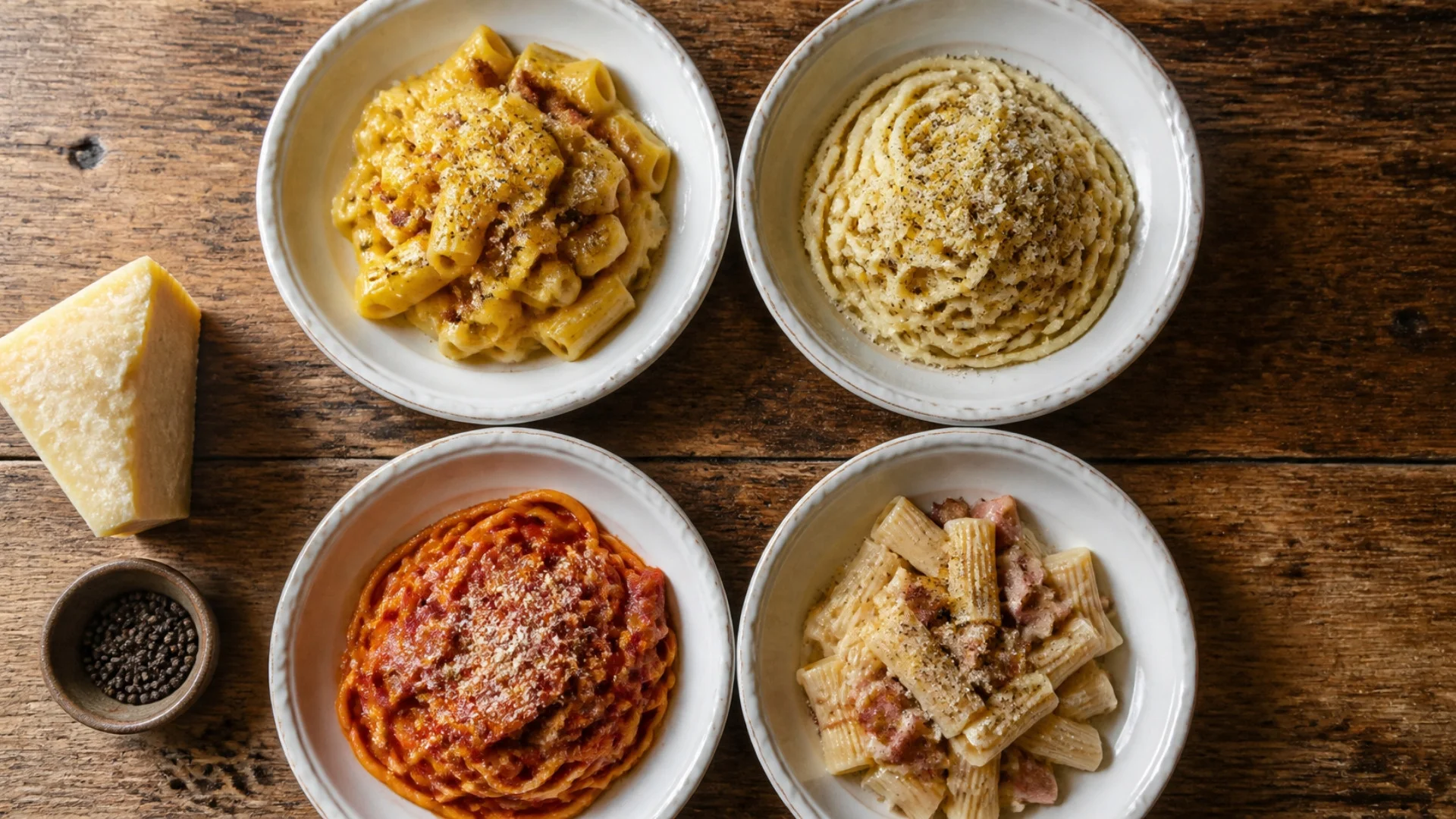
If you order only one thing, make it one of the four pastas that define Roman cooking. They share the same base, guanciale (cured pork jowl) and pecorino romano cheese, and each adds one idea:
- Rigatoni alla gricia: guanciale, pecorino and black pepper. The oldest of the four, and the purest.
- Rigatoni alla carbonara: gricia plus egg yolks, whipped into a silky sauce. No cream, ever.
- Bucatini all'amatriciana: guanciale with tomato, a recipe named after the town of Amatrice.
- Tonnarelli cacio e pepe: just pecorino and black pepper on our handmade pasta, the simplest dish on the menu and the hardest to make well.
Tasting two of them side by side, shared between two people, is the best way to understand how small changes create completely different dishes.
Handmade pasta and the sea
From the handmade egg pasta section, fettuccine Alfredo is worth ordering for its history alone: the original Roman version is just butter and parmesan, nothing like the cream-heavy dish served abroad. Seafood lovers should look at the spaghetti alle vongole veraci with clams, the linguine with swordfish and pistachio, or, for a special occasion, the tonnarelli all'astice with half a lobster.
Roman main courses
Two meat dishes tell the story of the city. Saltimbocca alla romana are thin veal escalopes with Parma ham and sage; the name means "jumps into the mouth", which is exactly what they do. Coda alla vaccinara, oxtail stew traditionally braised for hours with tomato and celery, comes from the working-class tradition of cooking the "fifth quarter" of the animal, and it is one of the most comforting dishes in Rome. If you prefer fish, a grilled sea bass or sea bream with a side of vegetables is light and generous.
Don't skip the vegetables
Romans take their side dishes seriously. Cicoria ripassata, sautéed chicory, is the classic partner for any main course. When artichokes are in season, order both Roman styles: carciofi alla romana, slow-cooked with mint, parsley and garlic, and carciofi alla giudia, fried until the leaves open like a crisp flower, a recipe from Rome's Jewish quarter just a few minutes' walk from our door.
Pizza, if that is what you came for
Pizza is not a Roman invention, but Rome has its own way with it, and we make both red and white. A margherita is the test of any kitchen. For something more local, try the pizza ciociara with chicory and sausage, inspired by the countryside south of Rome, or our pizza a modo nostro with mortadella and stracciata cheese.
A sweet ending
Finish with our homemade tiramisù, the dessert most guests ask about, or an affogato al caffè for an Italian ending in two spoonfuls. Then do as the Romans do and close the meal with an espresso.
You can browse every dish, with its description and price, on our menu page, and book your table online. We look forward to cooking for you.